Choosing a maker/8 min read
Timber furniture finishes explained
The finish decides whether a scratch is a 10-minute fix or a full re-sand. That matters more on a family dining table than the timber species does.
Ready to price something specific? See timber furniture in Adelaide or restoration in Adelaide.
The finish decides what happens the first time someone puts a hot dish on your table or drags a plate across it. With a hardwax oil that is a 10 minute repair with an abrasive pad and a wipe of oil. With a catalysed lacquer it is a stripped, re-sprayed panel and a workshop invoice. On a family dining table, that single difference matters more than which timber you chose.
The question that decides it, and it is not durability
Almost everyone asks which finish is toughest. It is the wrong question, because the toughest finishes are also the ones that cannot be repaired in place.
Every finish sits somewhere on a trade between 2 things: how much it resists, and how easily it is put right when it stops resisting. A film finish, meaning polyurethane or lacquer, sits on top of the timber as a continuous plastic layer. While that layer is intact it is excellent. Once it is breached it cannot be blended, because a patch of new film over old film shows as a visible edge, so the repair is to sand the whole panel back and start again.
A penetrating finish, meaning hardwax oil, soaks into the top few fibres and hardens there. It resists less. It also has no film to breach, so a damaged area is cut back and re-oiled and the repair disappears.
Match that trade to how the piece will be used, not to which sounds better in a quote.
The 5 finishes compared
| Finish | Water and heat resistance | Repairability | Feel and sheen | Re-coat interval | Cost on a $4,500 table | | --- | --- | --- | --- | --- | --- | | Hardwax oil | Good water, moderate heat | Excellent. Spot repair in 10 to 30 minutes | Matte to low satin, timber texture stays | 12 to 24 months in daily use | Baseline | | Polyurethane | Very good both | Poor. Sand and re-coat the whole panel | Satin to gloss, a film you can feel | 8 to 15 years | Add $150 to $400 | | Catalysed lacquer | Excellent both | Poor. Strip and re-spray the panel | Any sheen, very even, slightly cool | 10 to 20 years | Add $250 to $600 | | Shellac | Poor. Marks from water and alcohol | Excellent. Re-amalgamates with alcohol | Deep, warm, luminous | 3 to 8 years | Add $200 to $500 | | Wax over oil or shellac | Poor on its own | Trivial. Re-wax | Very low sheen, silky | 3 to 6 months | Add $60 to $150 |
The cost column is the applied cost difference on a mid-range dining table, and it is a smaller lever than species. Changing from Tasmanian oak to blackwood moves the same quote by 35% to 55%. Changing the finish moves it by under 15%, which is why choosing a finish on price is close to always the wrong call.
Hardwax oil
A blend of hardening oils and waxes that cures inside the timber. This is the default on Australian custom furniture for good reason: it looks and feels like timber rather than like a coating, it is applied in 2 or 3 thin coats, and it is maintained by the owner rather than by a workshop.
Its weakness is heat and standing water. A hot pan will leave a pale mark, and a glass left overnight will leave a ring. Both are usually recoverable at home, which is exactly the point.
Polyurethane
A film finish, either single-pack oil-based or 2-pack catalysed. Genuinely tough, genuinely water resistant, and the correct choice on kitchen cabinetry, laundry joinery, bathroom vanities and anything that gets wiped down constantly. That work is a cabinet maker's rather than a furniture maker's, and the reason is set out in cabinet maker, furniture maker or joiner.
On a solid timber tabletop it is a reasonable choice for a household that wants zero maintenance and accepts that the top will be re-sanded once a decade rather than touched up yearly.
Catalysed lacquer
Sprayed, cured chemically, and the standard in commercial and hospitality work where a surface has to survive 300 people a week. It gives the most even, controllable sheen of any finish and the best all-round resistance.
It has to be applied in a spray booth, which means a smaller pool of makers, and it cannot be repaired anywhere except in that booth. Specify it when the piece is genuinely commercial or when the household truly will not maintain a finish.
Shellac and wax, and where they still belong
Shellac is the oldest finish still in serious use and it is unbeatable at 1 job: restoring old furniture. Because new shellac dissolves into old shellac, a French-polished surface can be repaired invisibly, over and over, for 100 years. Nothing else does that.
It also marks if you look at it wrongly. Water rings, alcohol spills, hot mugs. Never specify it on a dining table in daily use. Do specify it if you are restoring a piece that already has it, because stripping shellac off an antique to apply polyurethane destroys value. Furniture restoration in Adelaide covers when a piece is worth restoring at all.
Wax is a topcoat, not a finish. Over oil or shellac it adds a soft sheen and a pleasant feel, and it needs re-applying every 3 to 6 months. Waxing bare timber protects nothing.
Which finish suits which piece
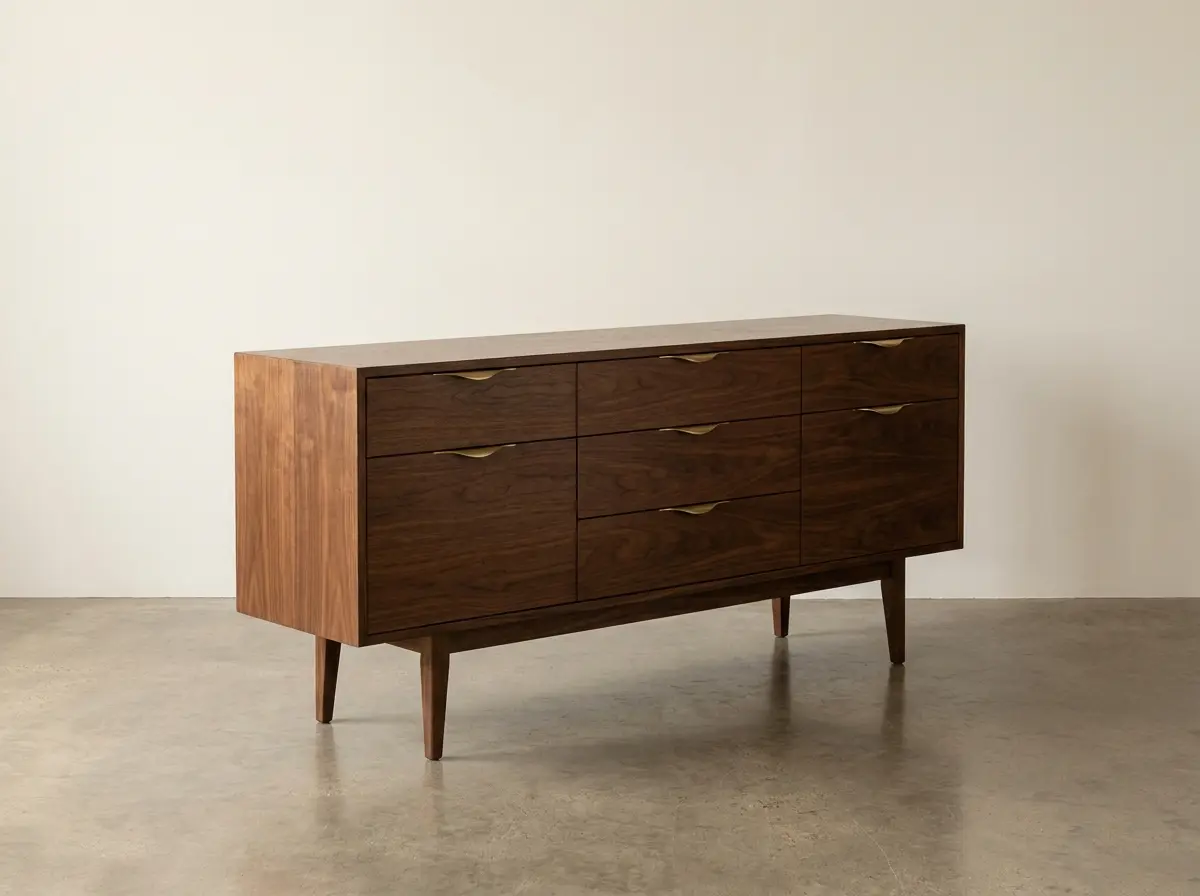
| Piece | The right finish | Why | | --- | --- | --- | | Family dining table | Hardwax oil | Marks happen weekly and must be fixable at home | | Café or commercial table | Catalysed lacquer or 2-pack | Volume of use exceeds any repair schedule | | Desk | Hardwax oil | Warm to touch, and a mouse or a mug mark is repairable | | Coffee table | Hardwax oil | Same reasoning, lower frequency | | Bedhead | Oil, wax or lacquer | Almost nothing touches it, so pick on feel | | Buffet or sideboard carcase | Hardwax oil or lacquer | Low contact, so appearance leads | | Kitchen and laundry joinery | 2-pack polyurethane | Constant wiping, moisture, cleaning products | | Wardrobe interiors | Lacquer or melamine | Sealed, low odour, no maintenance | | Outdoor furniture | Penetrating exterior oil | Re-coat 6 to 12 months. A film finish will lift under Adelaide UV | | Antique restoration | Shellac | Repairs invisibly, and preserves value |
Why the underside matters as much as the top
This is the specification line most often missing from a quote, and in Adelaide it is not optional.
A solid timber top exchanges moisture with the air through every exposed face. If the top face is sealed with 4 coats and the underside is left bare or given 1 quick wipe, the 2 faces gain and lose moisture at different rates. The unsealed face dries faster, shrinks faster, and the panel cups: the edges lift and the centre drops, or the reverse.
Adelaide makes this worse than most cities. It is the driest mainland capital, and a house running ducted refrigerated cooling can sit under 30% relative humidity indoors for weeks through February, then swing back in winter. That cycle is repeated every year, and an unevenly sealed top will move every year with it. The mechanism is set out in why solid timber tables split in Adelaide homes.
So the line to look for in a quote is simple: the same finish, the same number of coats, both faces. If it does not say so, ask. A maker who builds for this climate will confirm it without hesitation, which is 1 of the 9 filters in how to choose a furniture maker in Adelaide.
What to ask for in the quote
- The finish product by name, not just "oiled" or "sealed"
- The number of coats on the top face and on the underside
- The sheen level, stated as matte, satin or gloss
- Who re-coats it, and at what interval
- Whether the maker will supply a small bottle of the same product for touch-ups
That last one costs a maker almost nothing and tells you a lot about whether they expect the piece to be maintained. Once it is in the house, caring for solid timber furniture in Adelaide covers the cleaning and re-oiling routine, and Wood Solutions is the Australian industry reference on how species and coatings interact.
Species and finish are chosen together, not separately. Custom timber furniture in Adelaide sets out which species suit this climate and what each one costs.