Built-in and fitted
Custom joinery in Adelaide
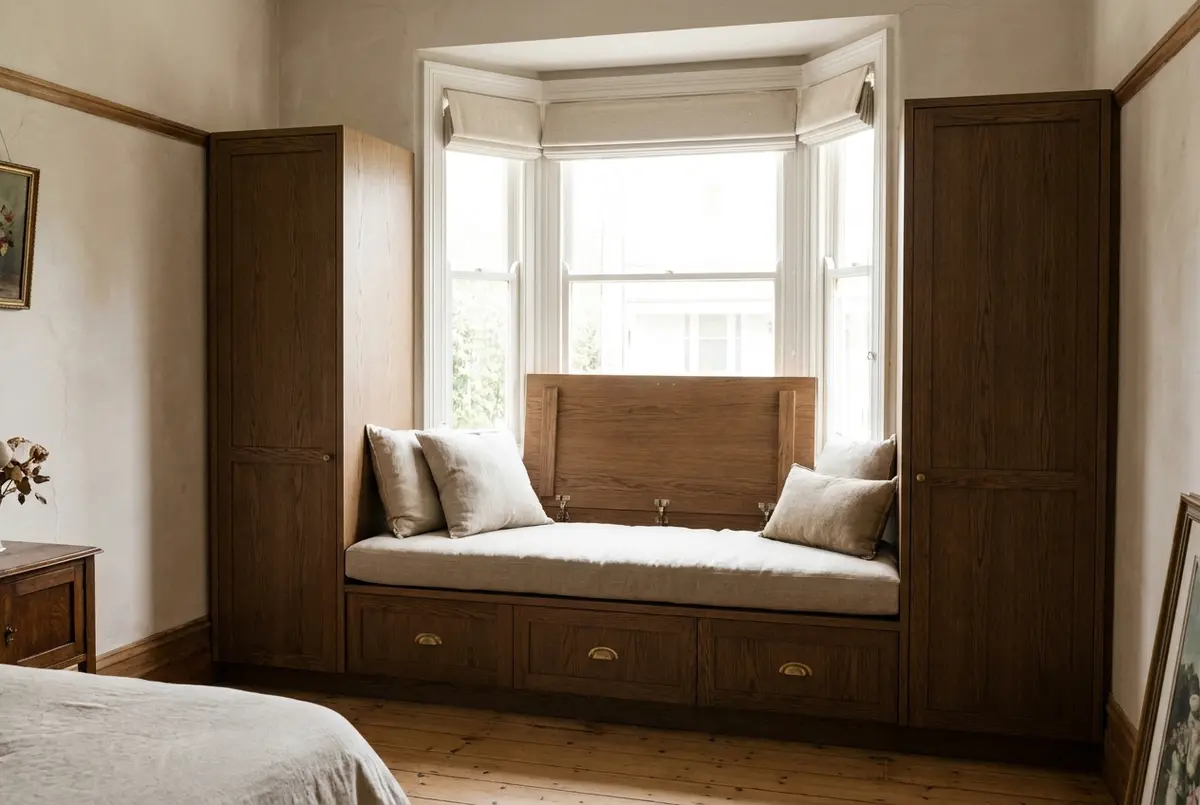
Custom joinery in Adelaide starts at $3,500 for a single fitted run and takes 8 to 16 weeks. Joinery is cabinetry fixed to the building: window seats, mudrooms, alcove units, laundry and butler pantry runs, and kitchen cabinetry. That one distinction drives everything else, because fixed work is priced from a site measure and signed shop drawings, and it has to land between the other trades on a renovation.
This page covers what joinery includes, what the common jobs cost in this city, how a fixed price is actually arrived at, and where the work sits in a renovation program. Bedroom storage is the single most requested category and has its own page at built-in wardrobes. The trade that does most of this work is described at cabinet makers in Adelaide, and if you are unsure which trade to call at all, start with cabinet maker, furniture maker or joiner.
Scope
What joinery covers, and what each job costs here
Costs are for the cabinetry itself, supplied and installed. Stone benchtops, appliances, tiling, tapware and electrical work sit outside these figures and are usually contracted separately.
| Job | Typical installed cost | Lead time |
|---|---|---|
| Window seat with storage, 1,800 to 2,400mm | $3,500 - $6,500 | 8 - 12 weeks |
| Alcove units either side of a fireplace | $4,000 - $9,000 | 8 - 12 weeks |
| Mudroom or drop zone: bench, hooks, shoe storage | $3,500 - $7,000 | 8 - 12 weeks |
| Study or library wall | $4,500 - $12,000 | 8 - 14 weeks |
| Laundry run, 2,400 to 3,000mm (excludes benchtop, appliances) | $5,500 - $12,000 | 10 - 14 weeks |
| Butler pantry | $7,000 - $18,000 | 10 - 16 weeks |
| Kitchen joinery, galley or L-shape (excludes stone, appliances) | $12,000 - $35,000 | 10 - 16 weeks |
The line between joinery and furniture is not a matter of quality or price, it is a matter of attachment. A piece that is scribed, packed, levelled and screwed to the structure, and that stays with the house when it sells, is joinery. A piece you could carry out the front door is furniture. That single test decides who quotes it, how it is drawn, when it is installed, and who carries the risk if a wall turns out to be 20mm off.
It also decides what happens to your money. Freestanding furniture is finished in a workshop and delivered. Joinery is only half finished when it leaves the workshop, because the fit is the other half of the job, and a large share of the labour in the quote is install time on your site. That is why a joinery run costs more per metre than a freestanding cabinet of the same size, and why a joiner who has not seen the room cannot give you a real number.
Process
How a fixed price is actually arrived at
Joinery runs to a sequence. Skip a step and the price moves later, which is the thing everybody says they want to avoid and then causes.
- 1.Site measure. Non-negotiable, and it happens before anything is drawn or priced. It records the finished wall positions and how far out of square they are, the floor level and its finish, every service outlet, the door and window swings, and the access route the cabinets have to arrive through.
- 2.Shop drawings. A plan, elevations and sections at a working scale, with a hardware schedule and a finish schedule attached. You review and sign these. They are the reference for everything that follows, and almost every joinery dispute traces back to something discussed but never drawn.
- 3.Fixed price against the signed drawings. Only at this point does a joinery quote become a price rather than an estimate. Any variation after this is priced against the drawings, so you can see exactly what changed and what it cost.
- 4.Deposit of 40% to 50% at order, with the balance on completion. That deposit buys sheet stock, hardware and a slot in the workshop program, and it is the point at which your lead time starts running.
- 5.Build off site, then a check measure before the final cuts. Good joiners re-measure once the room is plastered and before the scribes are cut, because a 15mm change in a wall between measure and install is a normal event in an older house, not an unusual one.
The site measure carries more weight in joinery than in any other part of this trade, and there are 3 reasons. Walls in Adelaide homes built before 1940 commonly run 15mm to 25mm out of plumb over a 2.4 metre height, and joinery is cut to the millimetre against them. Services fix the layout: a waste position, a gas point or a single power outlet in the wrong place can move a whole bank of cabinets. And the floor decides the heights, because a 12mm engineered board laid after the cabinets go in raises everything by 12mm and closes the clearance an appliance needed.
Sequencing
Joinery has to land between the other trades
On a renovation, joinery is not a thing you order when the room is nearly ready. It is a thing you design early and install late, and the gap between those 2 moments is where programs go wrong. The order that works in an Adelaide renovation is: demolition and structural work, then electrical and plumbing rough-in, then plaster, then flooring where it runs under the cabinets, then the joinery install, then benchtop templating and fabrication, then plumbing and electrical fit-off, then painting and touch-up.
The joinery layout must be locked before the rough-in, because the rough-in is set from the joinery drawings. Power points, appliance feeds, waste positions and any under-bench outlets are all positioned from those elevations. A joinery order placed after the electrician has finished is the most common cause of a blown renovation program in this city, and the fix is always more expensive than the original decision would have been.
Stone benchtops add their own gate. The fabricator templates the cabinets after they are installed and levelled, not before, and then needs a further 5 to 15 working days to cut and polish. Plan for a kitchen that has cabinets and no benchtop for 2 weeks and you will be right. Plan for a kitchen that is finished the day the joinery lands and you will be cooking on a trestle.
Season matters too. Adelaide workshops fill their December slots by about August, and a joinery run at 8 to 16 weeks crosses that boundary easily. If a kitchen has to be usable by Christmas, the deposit belongs in winter.
Licensing in South Australia
Furniture making and cabinet making are not licensed trades in South Australia. There is no register you can look a joiner up on, which is precisely why the checks below matter.
Building work is regulated separately. Fitting cabinetry into finished rooms is one thing. A job that involves structural change, altering walls, or forming part of building work on the property is another, and other requirements can apply to that part of it. Ask the maker, or the builder running your renovation, to confirm what your specific job needs before anyone starts. Electrical and plumbing work is not a grey area: it must be done by the relevant licensed trade.
Before you commit, check the maker's ABN, ask for a certificate of currency for their public liability insurance, and ask to see completed Adelaide work. On a renovation, also settle who holds the contract for the joinery and who owns the program, because a joiner working to a builder's dates and a joiner working to yours are 2 different arrangements.
FAQ
Custom joinery in Adelaide: common questions
What counts as joinery rather than furniture?
Joinery is fixed to the building. If the piece is scribed, screwed or plumbed to a wall and stays with the house when you sell, it is joinery: window seats, mudrooms, alcove units, laundry runs, butler pantries and kitchens. If it can be carried out the door, it is furniture. The distinction changes how the work is quoted, sequenced and installed.
How much does custom joinery cost in Adelaide?
From $3,500 for a single fitted run such as a window seat, over 8 to 16 weeks. A laundry run of 2,400mm to 3,000mm costs $5,500 to $12,000 excluding the benchtop and appliances, and kitchen joinery for a typical galley or L-shaped layout runs $12,000 to $35,000 excluding stone, appliances and tiling. Deposits are 40% to 50% at order.
Why does joinery need a site measure?
Because the work is cut to a millimetre against walls that are out by 15mm to 25mm, and because the services decide the layout. A measure records the finished wall positions, the power, water, waste and gas outlets, the floor finish and its thickness, and every door swing. Quoting joinery without one produces an estimate that will move, not a price you can rely on.
When in a renovation should joinery be ordered?
Before the electrical and plumbing rough-in, not after. Power points, waste positions and appliance feeds are set from the joinery drawings, so the layout has to be locked first. The final measure then happens once the walls are plastered. Ordering joinery after rough-in is the most common cause of a blown renovation program in Adelaide houses.
Does a joiner need a builder licence in South Australia?
Furniture making and cabinet making are not licensed trades in South Australia, so there is no register to check. Building work is regulated separately, and a job that goes beyond fitting cabinetry into finished rooms may fall under those requirements. Ask the maker, or the builder running your renovation, to confirm what your specific job needs before work starts. Electrical and plumbing work must always be done by the relevant licensed trade.
What are shop drawings and do I need them?
Shop drawings are the plan, elevations and sections of your joinery at a working scale, with a hardware and finish schedule attached. You sign them and they become the reference for the fixed price and the build. Insist on them on any job above about $5,000. Almost every joinery dispute traces back to something that was discussed but never drawn.
Keep reading
You might also find this useful
- Custom shelving and bookcasesAlcove units and library walls, with the shelf spans that hold and the scribing an older room demands.Read it
- How commissioning actually worksThe 6 stages from enquiry to install, what you need ready at each one, and where delays actually come from.Read it
- How to choose a maker in AdelaideThe 9 checks that filter the field when there is no licence or register to rely on.Read it
Start here
Get your joinery priced by Adelaide makers
Tell us the rooms involved, whether a builder is already on the job, and roughly what you want to spend. We pass it to a local maker who does fitted work, and they measure and quote you directly.
- Free to use. The maker may pay us a fee, you never do.
- Check the maker's ABN, insurance and completed Adelaide work before you commit.
- Adelaide metro only, so you are not sent to an interstate workshop.