What it costs/7 min read
Custom versus flat-pack: when the extra cost is worth it
Custom is not always the right answer. There are 3 clear situations where flat-pack wins, and knowing them saves you thousands.
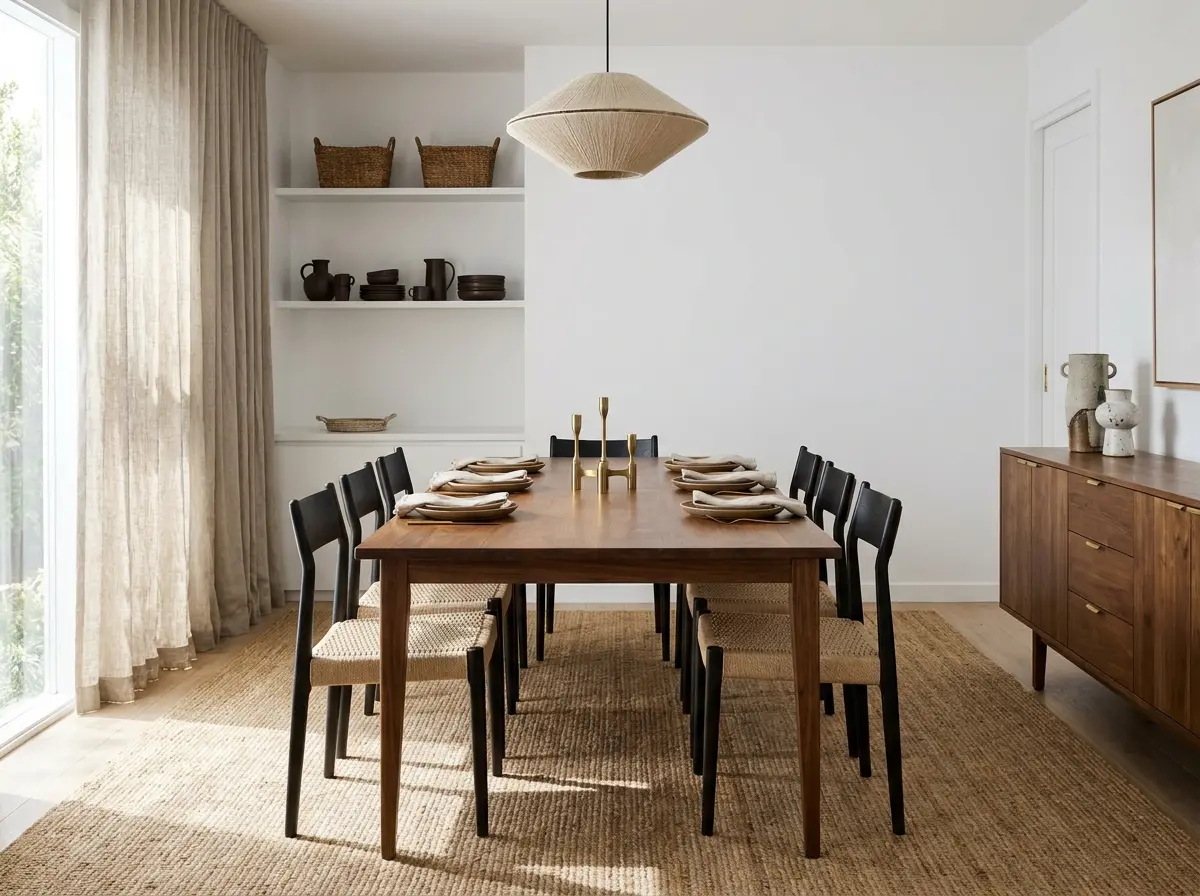
Ready to price something specific? See dining tables in Adelaide or entertainment units in Adelaide.
Custom furniture is not always the right answer, and any page that says otherwise is selling something. There are 3 clear situations where flat-pack is the better buy, and knowing them will save you thousands. There are 5 where custom wins decisively. The honest verdict sits between the 2, and it turns almost entirely on how long the piece stays with you.
The price gap is real: a $600 flat-pack dining table against a $4,000 custom one is not a rounding error. What sits behind those numbers is set out in what custom furniture costs in Adelaide, and the detail on tables specifically is in what a custom dining table costs.
The 3 times flat-pack is the correct buy
1. A rental, or a home you will leave inside 3 years. Custom furniture is built to a room. Take it out of that room and you have an expensive piece that does not fit the next one. If your next address is unknown, buy the standard size and keep the flexibility.
2. A room whose use is not settled. A study that might become a nursery, a front room that might become a dining room, a rumpus that might become a bedroom. Committing $6,000 of fitted joinery to a room you will re-purpose in 18 months is the most expensive way to learn what you actually wanted.
3. A child's room that will be re-purposed. A desk that suits a 9-year-old does not suit a 15-year-old, and a bed frame with a slide built into it is a 5-year asset. Buy standard, replace it when the child changes, and put the custom budget into the rooms that will not change.
There is a 4th honourable mention: any piece where you genuinely do not care. Some furniture is infrastructure. A shelf in a garage does not need joinery.
The 5 times custom wins
1. A standard size does not fit. A 3.1m dining space takes a 2,400mm table with 900mm of clearance behind each chair. Retail jumps from 2,200mm to 2,700mm and neither works. This is the most common reason people commission a first piece.
2. An alcove, a chimney breast or a bay. Adelaide has a lot of pre-1940 housing stock with recesses beside a fireplace and walls that are out of square by 20mm across 3m. Freestanding furniture in one of those rooms leaves gaps that collect dust and look like a mistake. This is exactly what custom shelving exists for.
3. The piece must match existing joinery. Once there is a timber kitchen, a veneer wall unit or a mantel already in the house, a piece bought in a different timber and a different sheen sits at odds with it for as long as it is there.
4. The piece will be kept 20 years. Solid timber tolerates being sanded back and re-finished. Particleboard does not. This is the whole ballgame on a dining table.
5. Weight, load or heat is involved. A media unit carrying an amplifier and a subwoofer, a bookcase carrying 400kg of books, a bench that gets hot dishes put on it. Flat-pack shelving sags visibly at 900mm spans under book load. A custom entertainment unit is built to the span and the load.
The 10-year cost of ownership
Take a $600 flat-pack dining table replaced twice against a $4,000 custom one kept the whole 10 years.
| Line | Flat-pack path | Custom path | | --- | --- | --- | | Purchase | $600 | $4,000 | | Replacement, year 4 | $650 | $0 | | Replacement, year 8 | $700 | $0 | | Delivery and assembly, 3 times | $180 | included | | Maintenance over 10 years | $0 | $250 (1 re-oil) | | Disposal, 2 hard-rubbish runs | $0 to $120 | $0 | | Total 10-year cash | $2,130 to $2,250 | $4,250 | | Value at year 10 | $0 | $1,500 to $2,500 | | Net cost of ownership | $2,130 to $2,250 | $1,750 to $2,750 |
Read that last row carefully, because it does 2 things at once. On net cost the 2 paths converge, and the custom table can genuinely finish cheaper. On cash flow the flat-pack wins outright: you never have $4,000 out of your account, and $3,400 stayed available for 4 years.
If you do not value the outcome, the flat-pack is the better financial decision and there is no clever way around that. What the table cannot show is the 10 years in between, where 1 household ate on a table that fitted the room and the other ate on 3 tables that did not.
What flat-pack genuinely does well
It is worth being specific rather than dismissive. Modern flat-pack does several things very well:
- Immediate availability. In your house this weekend, against 8 to 14 weeks for a custom dining table.
- Consistency. Every unit is identical, which makes replacing or extending a set trivial.
- Modularity. Adding a matching cabinet 3 years later is a real advantage custom cannot match.
- Standard fittings and safety hardware. Tall units ship with anti-tip restraints, and fitting them is not optional. The requirements for toppling furniture in Australia are published by Product Safety Australia.
Where flat-pack fails, and it is not where you think
The surface is not the problem. A melamine or foil-wrapped surface is hard, consistent and easy to clean, and often outperforms an oiled timber top for stain resistance.
The failure is at the fixings. A cam lock or a screw into particleboard grips by compressing the board fibres. That grip is strong the first time, weaker the second, and unreliable the third. Disassemble a unit twice and the carcase goes out of square permanently. This is why so much flat-pack dies during a move rather than during use.
The second failure is edges. Once an edge band lifts and moisture reaches the core, particleboard swells irreversibly and cannot be sanded back. In a kitchen or laundry that is a 3 to 6 year clock.
The honest verdict
Buy flat-pack when the piece is temporary, when the room is unsettled, or when the standard size fits and you do not care what it is made of. That is more situations than most furniture pages will admit.
Commission custom when the room dictates a size retail does not make, when the piece has to live alongside existing joinery, or when you are buying something you expect to still own in 2046. The break-even on a dining table sits around 8 to 10 years, which means the decision is really a question about your next decade rather than about furniture.
If the answer is custom, the sizing and specification detail is on the custom dining tables page, and the per-metre model that governs fitted work is in what a built-in wardrobe costs.